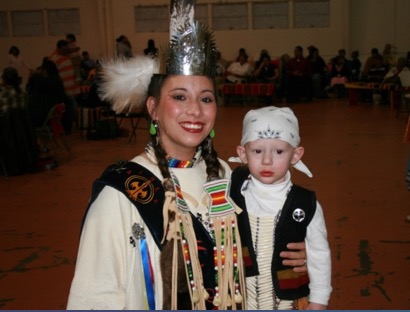

I feel like this semester, the most passion for my role in research came from thinking about canonical parameters. Over the last sixteen weeks, I have been trying to apply these restrictions to learning in all of my classes. These are my thoughts as time has gone by…
I came into this semester looking forward to this Cultural Heritage Data and Social Engagement, Classical Rhetorical Theory, and Memory and Nostalgia classes. Like any semester I found issues that I could connect between classes…and isn’t that the ideal situation? Unfortunately, that similarity sometimes bled from one class into another. That infusion of thought was helpful but sometimes inconvenient for blog interaction’s sake. One idea that I kept thinking about though was, why are we studying the same things sometimes? It wasn’t an issue of learning a concept, then the next time we visit it we grow on that topic like we all saw in our K-12 experiences; it was the realization that we were studying the same people…the same ideas. This was the canon at work.
As an Indigenous scholar, it was hard. I realized that I was reading ideas that never applied to me or to my culture. I sat in my classical rhetorical theory class wondering if Western culture was so different than mine that while these were new concepts to some of my classmates they were my regular thoughts. When we talked about relationships between mind and body not being a fusion that was common, I was perplexed. When we talked about current relationships with animals as family more than pets being a recent thing, I found myself bewildered. We read Aristotle, Cicero, and Quintilian all with the idea that these were powerful, often slave-owning, white males in a society that was very different than ours whose words have lived on for over 2000+ years. While there are small lessons to be learned from bits of their knowledge, it doesn’t change that we are modeling our ideals off of individuals who we just can’t relate to on a personal level. This is the pattern. We learn the same lessons, from the same individuals, whose lives don’t necessarily reflect our own life or culture. As a Native American, woman, living in 2022…I know that while the canon has expaned little by little, and bit by bit to include more minority women, there is still a long way to go as Dr. S describes in the week 5 lecture. I believe that structures of colonialism are major contributing factors to Indigenous works not being included as authoritative knowledge that wasn’t included until recently.
Błoch, Filho, and Bojanowski reflect on these concerns of the lack of minority inclusion when they say, “people of color were indeed embedded in the colonial structure…their agency should be interpreted not only within a class struggle characterized by oppression and resistance but also within a broader cultural and relational context” ( Slaves, Freedmen, Mulattos, Pardos, and Indigenous Peoples). For me, this is a reminder that there are ongoing fights happening. That these fights recognize the difficulty that minority people suffered and continue to endeavor so that their history can be part of the larger picture of human existence and their stories can live alongside those of the Western majority.
Luckily, was more recently than 2000+ years ago that there were fem voices, LGBTQ2S+, and BIPOC contributing to the teachings of contemporary students.

This semester within the readings and websites of the Cultural Heritage Data and Social Engagement I feel like I have been seeing firsthand what happens when we work to destroy the canon. Even though there is a big difference between Classical rhetoric and digital humanities it has been interesting to see how the canon forms and how we can destroy it all over the span of sixteen weeks.
Amy E. Earhart says, “those working within rhetoric, media, and communication, and particularly those working in game studies, have constructed a body of scholarly work that interrogates the theoretical implications of race construction within technology” (p. 310). This really resonated with me because it gave me hope that along with the increase of diverse voices, the interdisciplinary work being done in the fields is growing and changing. Even going back to the first websites that we looked into as a class that change was apparent. The CCP (https://coloredconventions.org/), Digital Transgender Archive (https://www.digitaltransgenderarchive.net/), Chicana or mi Raza (https://chicanapormiraza.org/), and others have all shown us that the voices in the digital world do not have to be from those from a colonizer’s point of view.
“The insistence on the web’s ability to build new canons, of an applied approach to the digital tied to a theoretical model, is a hallmark of past and current digital humanities work” (Earhart “Can Information Be Unfettered?” 312). In the week 5 Lecture, Dr. S notes, “…in the United States we’ve had this history in which blackness (Indigeneity as well) means someone who was not fully considered human” (emphasis added). Thinking about all of this in terms of what history is told and the formation of generational canon it becomes easy to make the connection that the “victor” of time is the story that is told. For many generations, only the stories of majority victory were being repeated in books and therefore, it was a more critical endeavor for the minority truths and victories to be reclaimed in the digital. Kim Gallon, says to this “any connection between humanity and the digital therefore requires an investigation into how computational processes might reinforce the notion of a humanity developed out of racializing systems, even as they foster efforts to assemble or otherwise build alternative human modalities. This tension is enacted through what I call a “technology of recovery,” characterized by efforts to bring forth the full humanity of marginalized peoples through the use of digital platforms and tools” (Gallon, Making a Case for the Black Digital Humanities).
For Indigenous peoples and topics, there seems to be a juxtaposition between wanting the world to know what we have been through, and inserting our stories into the larger global voice. Unfortunately, there is a necessity to create works that will insert themselves into the canon, but exploitation clouds the ability for some to share the works that would allow that. Native people have had a rocky history with Western oppression and its somewhat-successful cultural genocide. Guiliano and Heitman (p. 3) argue, “the histories of genocide, colonialism, and
plunder in pursuit of Nation formation and knowledge preservation must be carefully contextualized and situated within Native and Indigenous data cultures. The powerful motivation for generational knowledge transmission and protection is a direct result of the centuries of colonial consequence”. Keeping this distrust, history of exploitation, abuse, and attempted genocide that Indigenous people have endured how does a group like this open up and share that which is most important in order to destroy the canon enough to include their voices?
I think that the long and short answer to that question is simply, they don’t. I feel like there is a lot of repair work that needs to be done between academia and the Indigenous people before a trust that allows access to enough aspects of Native culture to form a place within the canon. Looking at the difficulty and resistance sometimes met with the repatriation of sacred physical objects. Releasing sacred information from the past and knowing that it will be used in a responsible way has also been difficult. “As a distinct practice in its own right, digital repatriation encompasses many types of return, and requires work to define new areas of cultural needs, and to forge alternative sets of practices around the distinct features of digital objects” (Bell, Christen, and Turin).
Overall, there have been a few issues that may have prevented a shift in the rhetorical canon that has taken a while to begin its slow shift. Within the academy, students have looked to the words of men who lived over 2000 years ago to guide principles of the field. Along with some of these old principles, there came later, the idea that wisdom came from the Western tradition. The epistemology of minority communities wasn’t important to the academy. Today, we are seeing emergences of African American Studies and Native American Studies programs being validated, and fem and BIPOC individuals making their way into the top works being studied in the University. Change happens slowly though, and it only happens when there is security and trust in the process of sharing a story personal to the life and culture of the writer. We have seen over the course of the semester that the stories of minority people are being told from the perspective of their communities. This is something that needed to happen under the authority of communities who have experienced exploitation and mistreatment. Even though it has taken several years to begin the process of destroying the canon, I can’t wait to see what happens in the future to include a plethora of other voices to the stories we use as seminal works in the various fields!
Works Cited
Bell, Joshua K, et al. “Introduction: After the Return.” Museum Anthropology Review, vol. 7, no. 1, ser. 2, 2013, pp. 1–21. 2, https://doi.org/https://scholarworks.iu.edu/journals/index.php/mar/article/view/3184/4571.
Błoch, Agata, Demival Vasques Filho, and Michał Bojanowski. “Slaves, Freedmen, Mulattos, Pardos, and Indigenous Peoples: The Early Modern Social Networks of the Population of Color in the Atlantic Portuguese Empire.” Debates in the Digital Humanities 2016, edited by Matthew K. Gold and Lauren F. Klein, Chapter 13. Minneapolis, MN: University of Minnesota Press, 2016.
Earhart, Amy E. “Can Information Be Unfettered? Race and the New Digital Humanities Canon.” Debates in the Digital Humanities, 2012, pp. 309–318., https://doi.org/10.5749/minnesota/9780816677948.003.0030.
Gallon, Kim. “Making a Case for the Black Digital Humanities.” Debates in the Digital Humanities 2016, edited by Matthew K. Gold and Lauren F. Klein, Chapter 4. Minneapolis, MN: University of Minnesota Press, 2016.
Guiliano, Jennifer, and Carolyn Heitman. “Difficult Heritage and the Complexities of Indigenous Data.” Journal of Cultural Analytics, 2019, https://doi.org/10.22148/16.044.
Schroeder, Week 5 Lecture. https://mymedia.ou.edu/media/Week+5+CHDSEA+Unit+C+Black+Digital+Cultural+Heritage+part+1/1_ubjh2nel


 Numunu Family Tree
Leave a comment