The Highs and Lows of digitizing Indigenous Familial Knowledge
Describing Native kinship can be one of the most frustrating, amazing, wonderful, and confusing things that one can do. Jessica Restaino, in her discussion of role and misfit spaces, says there is a shifting space where processes reshape who we are (p.85). Fictive kinship reflects this same idea; our relationships and obligations change in this shifting, and bonds become kinship. I feel like the easiest way to discuss the highs and lows of digitizing Indigenous familial knowledge is to start by establishing how kinship can sometimes be explained. Usually, there is a tendency to only include the relationships of consanguinity and affinity, but in Native explanations of kinship, those included go way beyond blood and marriage. In many African American studies on chosen kin, we come across the term “Fictive Kinship” this term means – a relationship that goes beyond the typical friendship, one where individuals have the ability to step in as a family member, with ties just as strong. This occurrence is typical with individuals within the LGBTQ2S+ who are showing support to others who are going through a separation from their family. The term is discussed regarding displaced individuals who are seeking the ties they once had. Finally, this is a term that is used to describe the relationships that Native people have due to the assimilation, termination, and relocation eras aimed at cultural genocide.
“fictive only adds to the stigmatization, suggesting that these are not “real” relationships… we also considered the label chosen kin“
Nelson Quoting Braithwaite
Now, I don’t want this to read as though this is a totally Native phenomenon or something that exists in all Native households. My research revolves around the Chosen, or fictive kinship relations that are still existing, some over 100 years strong. I thought it would be beneficial to include a video that has a short explanation of the evolution of the typical family…There is very little conversation on how this worked with minority families except for a brief comparison to two other cultures. The good thing is that the video discussed the reason for the breakdown of the nuclear family and the rise of the modern family…one with no real requirements, one inclusive of all types of relationships.
So now that we have explored a few terms of how to describe different types of families or kinship; Nuclear, Extended, Fictive, Biological we can get into what makes Native kinship descriptions difficult. I want to start with a short story about a question I had about a cousin of mine that I brought to my Comanche language teacher.
AS: Okay, SD, so can you tell me how I’m related to my sister, T?
SD: What do you mean?
AS: Well, I know that our grandmas were related but I don’t get how.
SD: I mean they were sisters
AS: Oh okay! I thought they were cousins or something, I wasn’t sure
SD: Well, yea, I mean, they were cousins, but you know your Grandma 1 was really Penatʉka, they were peyote, but they had their allotment right next to your Grandma 2, she was Comanche was because she went to the church.
AS: wait, what?
SD: yea, she went to the church with everybody, all those Quahada
AS: no, not that. You mean she was Penatʉka, then how were they, cousins?
SD: I mean, I guess they weren’t really related, but that was her sister, so when she had kids, and your grandma 2 had kids, all those ones were raised out at Walters at the allotment, and then you and T were born…
All you need to know is that they were sisters, so you and T are sisters.
no one refers to someone as being “fictive kin.” They might say that person is “like” a member of their family, or that person is “family” to them.
Nelson
The interesting thing about that conversation that I want to point out is that there are kinship terms that would normally be concrete in some non-Native families. Within this story, those terms become very fluid. There are instances where we are told the two grandmothers are sisters, then they were cousins, then they were from completely different Comanche bands and were only close because their family allotments were next to one another. While there were successes in breaking apart tribal community groups in the allotment era, the individual families were failing to give up their communal ways. Families continued to seek each other out, and instead of choosing to forget the familial ties they held to other Comanches, they actively sought out ways to be together (Stremlau 272). As a final thought to the critique of Allotment and Reformation of the Native people, Stremlau says, “Native people’s commitment to their kin proved greater than reformers had expected, and through their resistance to the allotment process, Native people forced legislators to adapt the policy to better suit the needs of their families…Native kin continued to care for one another, however, and it was only this communalism that enabled Native people to survive” (281).
Secondly, in the above conversation, I am inquiring about a biological kinship to a “close” “cousin”. The cousin is actually a sister figure but is (by all rights) neither in the Western definitions of different kinship relations. What makes this complicated is that for some families, like mine, the fictive relationships are some that were established over 100 years ago when Comanches were moved to Ft. Sill and allotted land in the surrounding area. One reason for this flowing type of terminology is that there is a lack of words in the Comanche language that translate to complicated kinship terms. Culturally, the mother and all her sisters raise the kids so the sisters are all called mother. The same can be said for the father and his brothers (Shapiro, 2015). All older women and men who are not elders are aunties and uncles, and all elders are grandparents. The most confusing is the designation of sibling and cousin. Siblings are the children of all the mothers and fathers, and cousins are all those outside of the direct line who are between your age and auntie/uncle age. The exceptions to this are the cousins who are emotionally closer to the subject…they become brother/sister. Easy right??!! These long-standing kinship relationships that can be rarely understood are one of the main places we see a low of studying digital Indigenous familial knowledge. When a project like this is approached being applied through an Indigenous lens, there is less confusion when we approach a complexity like fluid kinship titles. Through the Western lens, there are expected terms that are considered the standard in kinship studies.
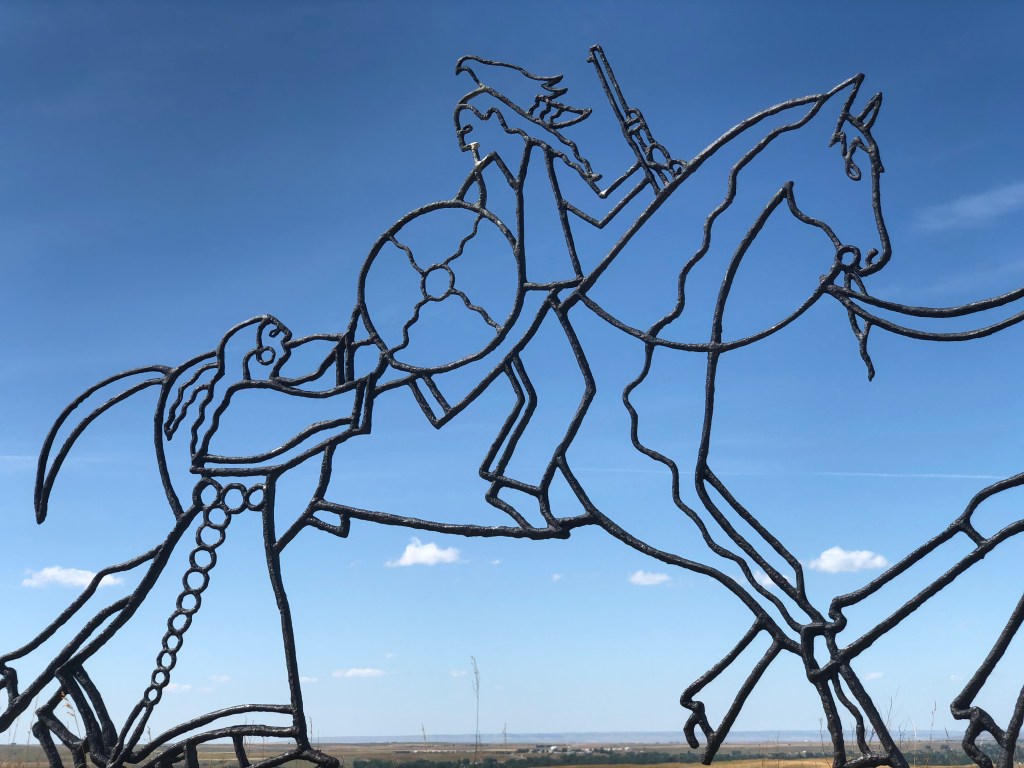
‘Spirit Warrior’ Memorial Little Big Horn Battlefield Sculpture by Colleen Cutochall Photo by: Allison Steinmeyer
I’ve been able to discuss a little about the lows of digitizing Indigenous familial kinship, but there is one more thing that I want to mention before moving on. Kim Tallbear, author of Native American DNA: Tribal Belonging and the False Promise of Genetic Science makes the argument that when the records of these familial relationships are misused or made public there is a danger for Native communities. By digitizing Indigenous familial kinship relations outside of programs like Murktu, which provide certain protections to private information, the door opens to individuals placing themselves within a family tree who may not belong there. One thing that Tallbear talks a lot about that should be included in this portion of the research is DNA and blood quantum. For many tribes, there is a specific blood quantum that an individual must possess to be enrolled as a citizen of their nation. Other tribes have an acceptance of maternal or paternal descendency or general descendency from an ancestor of the tribe. There have been incidents of individuals using public kinship charts of tribal descendency to claim their place within the tribe without having the proper legal proof of blood quantum. Tallbear also discusses the opportunities that are being given to these individuals who place themselves in Native culture on the basis of false descendency. She says that scholarships, employment opportunities, and other benefits are being abused by non-Native people claiming a culture they adopted themselves into. This concept of blood quantum is one that many tribal governments have fought over for many years. The idea of blood memory comes from N. Scott Momaday. Momaday states that blood is a vehicle for connection, integration, and remembering one’s way of existing. Blood memory is not connected to a concept of race but is a means of dismissing a taxonomic means of ethno-genocide (Dennison, 2012). There are also complications that emerge when we are discussing adopted or adopted out individuals from a family if that knowledge is not openly discussed.
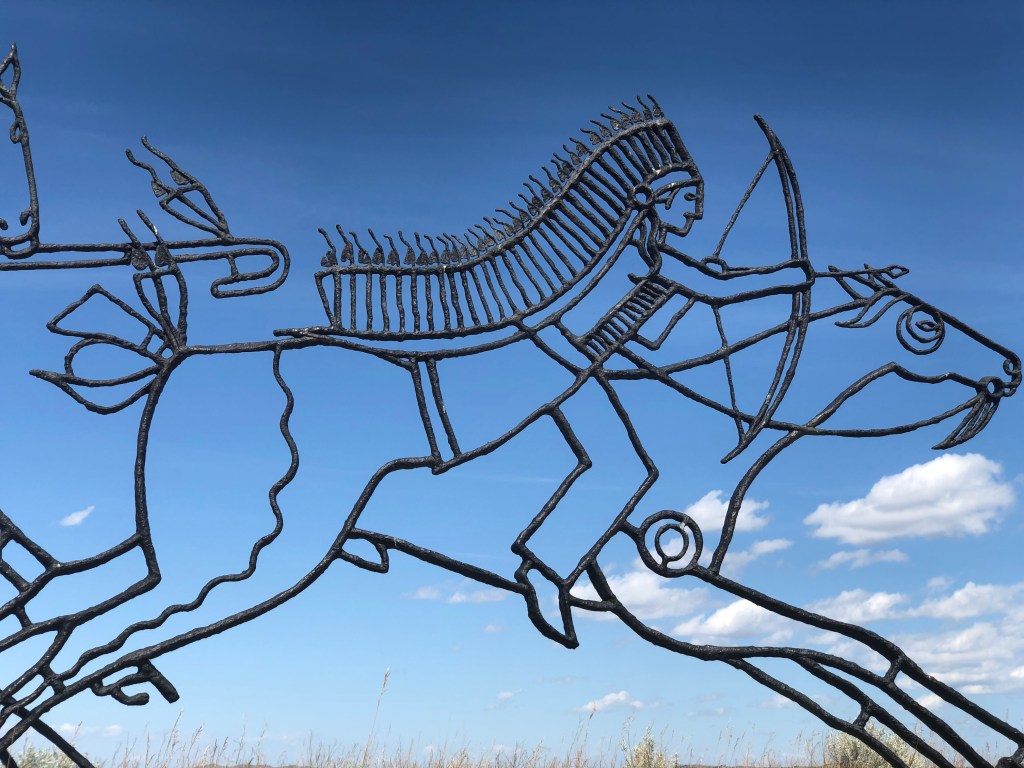
‘Spirit Warrior’ Memorial Little Big Horn Battlefield Sculpture by Colleen Cutochall Photo by: Allison Steinmeyer
So to finish on a high note, there are some highs to digitizing Indigenous familial kinship relationships. Probably the one thing that I feel is the most important is the idea of helping displaced Comanche people re-connect to their people, home, and family. There are over 17,000 Comanche tribal members enrolled all across the United States and some in the military who have been stationed around the world. A digital genealogy project would provide some of those individuals a way to learn about where they come from, and more easily be active in establishing roots if they have been displaced.
Second, where we come from is important in Comanche culture. When we introduce ourselves to people we begin with our name, our band, what family we come from, and who is a part of that family. This is information that we all should know so that when we meet other Comanches we can situate ourselves and make the connections to establish a relationship. As I discussed earlier, family can be a complicated thing. A more comprehensive digital kinship project would allow tribal members a way to help understand biological and affinal connections.
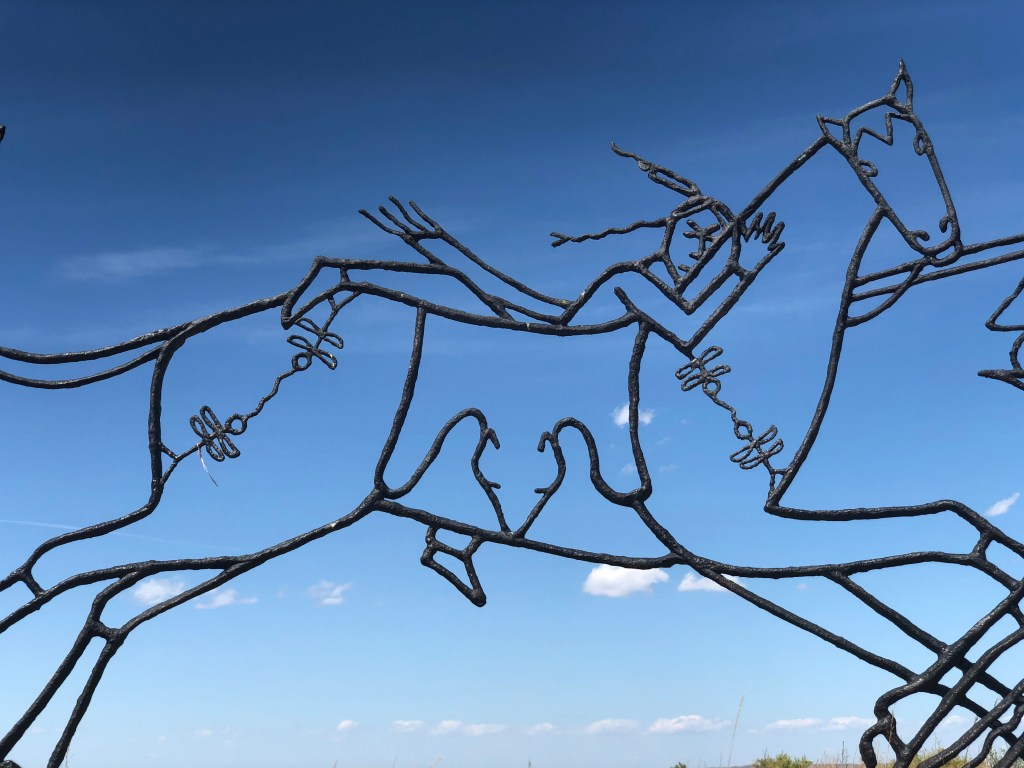
‘Spirit Warrior’ Memorial Little Big Horn Battlefield Sculpture by Colleen Cutochall Photo by: Allison Steinmeyer
Native people have relied on each other for stability, sanity, and strength through the generations of people and eras. From the removal period to the termination era, to the self-determination era, and beyond, kinship has been the bond that allows us to stay a unified people. In the“In the preserve era, Aboriginal bands in the Northern Plains were relatively small, kin-based communities that relied on the unity of their members for survival” (Innes 28). Today we still rely on each other for survival, not necessarily survival from physical genocide, but cultural genocide.
Dennison, Jean. Colonial Entanglement: Constituting a Twenty-First-Century Osage Nation. University of North Carolina Press, 2012.
Innes, Robert Alexander. “Elder Brother, the law of the People, and Contemporary Kinship Practices of Cowessess First Nation Members: Reconceptualizing Kinship in American Indian Studies Research.” American Indian Culture and Research Journal, vol. 32, no. 2, 2010, pp. 27-46.
Restaino Jessica. Surrender: Feminist Rhetoric and Ethics in Love and Illness. Southern Illinois University Press 2019.
Shapiro, Warren. “Not “From the Natives’ Point of View”: Why the New Kinship Studies Need the Old Kinship Terminologies.” Anthropos, Bd. 110, H. 1., 2015, pp. 1-13.
Stremlau, Rose. “To Domesticate and Civilize Wild Indians.” Journal of Family History, vol. 30, no. 3, July 2005, pp. 265-286.
TallBear, Kim. Native American DNA: Tribal Belonging and the False Promise of Genetic Science. University of Minnesota Press, 2013.
This post was so interesting and well put together. I’m sure researching and deciding how to organize all of your posts here, but especially this one, took a lot of time and thought. I really appreciate having the opportunity to read it all.
This is a really interesting and well put together post. I’m sure all of the posts, but especially this one, took a lot of thought and time to put together. I really enjoyed having the opportunity to read through it.


 Numunu Family Tree
Leave a comment