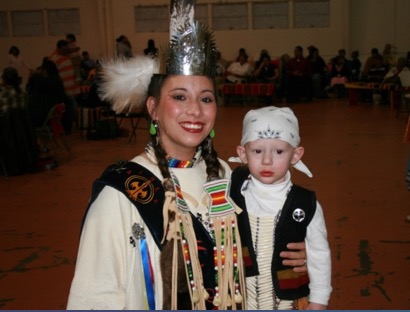
I thought long and hard about going with my original blog post idea of “Indigenous Genealogical Storytelling” but the more I wrote about “Digitizing Indigenous Familial Kinship” I felt like there was a lot already covered about genealogical complications. I will be inserting different things that I have been told while talking about digital Indigenous projects with elders.
Since storytelling, in general, is such an important aspect of Native culture I think that this is a more beneficial topic. I will be discussing reclamation through different forms of storytelling through film and story, music and visual performance, traditional/contemporary art, and Young adult literature. All of the examples that I plan on bringing into this blog are different examples of Indigenous people carving out spaces in the world where Native culture has not always existed.
To start our artistic ductus through Indigenous culture I really want to start with what is closest to the more traditional form of storytelling. The video below is the TEDx Manitoba with two of the comedy group 1491s. While the group focuses on comedy and parody of contemporary Native events like the adoption of Johnny Depp by the Comanches, and the original Avitar movie, most of their work is about life as a Native person. In the video, there are only short clips of what they produce on their YouTube channel but the discussion is more about using their work with other communities to reclaim what they see as important. This group breaks the stereotype of the “stoic Indian”. In their video, “Indian Store” when a customer enters the store the characters go from laughing and joking together to embodying the “stoic Indian” trope.
More recently, several members of the group can be seen on the recent Hulu original show “Reservation Dogs”. This show has also become a mainstream way to put Indigenous culture into the world. While the characters can be crass, harsh, and foul-mouthed it does show (for the most part) an accurate picture of what life can be like for Native people in a humorous way. That is the thing about groups like 1491s, they are able to show Native people smiling and being happy. The usual representation of Native culture is depressing, sad, full of horrible statistics, and full of abuse. While those things do occur, that is not all that our lives are made of. We have loving families, we laugh with each other, and defend our families and homes fiercely.
Source: TV Insider
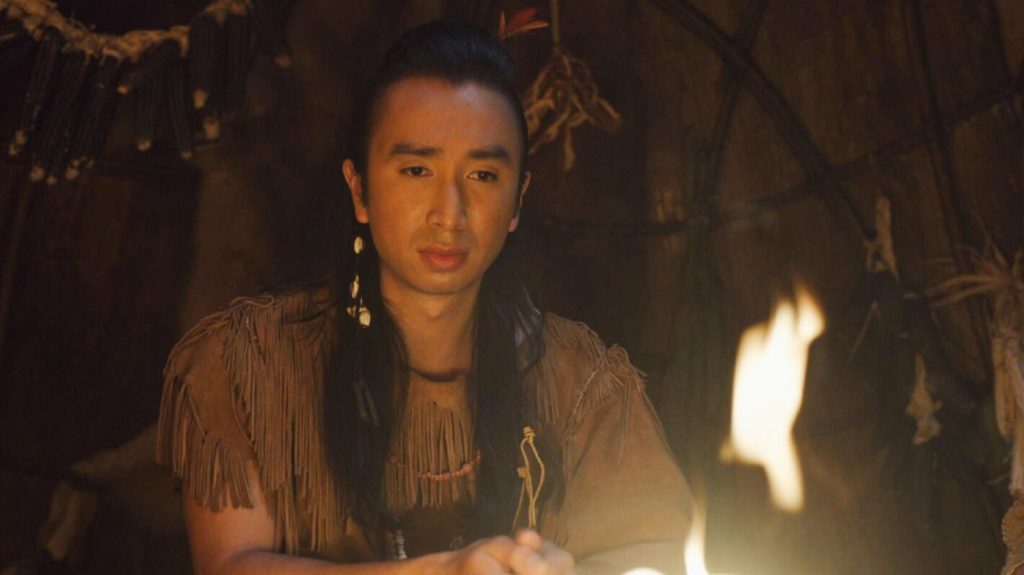
Besides Reservation Dogs, another Native character was released in the CBS show “Ghosts”. The character, Sas is portrayed as a Lenape Storyteller, who tragically died before he ever got to tell his story. In the episode where Sas finally tells his story we learn that he was ultimately discouraged to become a storyteller, even though the title was one that was revered within the community. This was not uncommon in several tribes. The tribes depended on the storytellers within the community or families to pass on the stories that help maintain the existence of the tribe.
This idea is part of why digitizing Indigenous familial kinship is important. Due to natural life cycles and after the surge of Covid-19 the Comanche Nation has sadly lost many of its elders who are the keepers of our stories. Without ensuring that the families know their stories we risk losing hundreds of years of knowledge. One problem that I have come across is the natural urge of elders to say that they do not want their stories recorded. They will tell the stories, but recording is an absolute no-no.
Moving on to music and visual performance, I feel like this concert of A Tribe Called Red is a great start. The duo combines powwow and round dance songs with Electronic Dance Music. The combination has led the way for other Indigenous music artists to gain recognition in a more Western-centered environment. Along with the unique sound that A Tribe Called Red produces, the imagery that accompanies the music solidifies the purposefulness of everything that goes into how they chose to represent Native culture. Shortly into the video, the duo has a grass dancer come out in his tribal clothes and traditionally dances to the EDM. Next we see a Fancy Shawl dancer come out and dance her traditional dance. What is interesting is that later the dancers come out in their street clothes and dances. There is the idea that these two people exist in both worlds. It is almost to say, we are Native people no matter what we are wearing…Like Bobby Wilson says in the 1491s Tedx “I am just as Indian as I stand before you with or without feathers popping out of my head”.
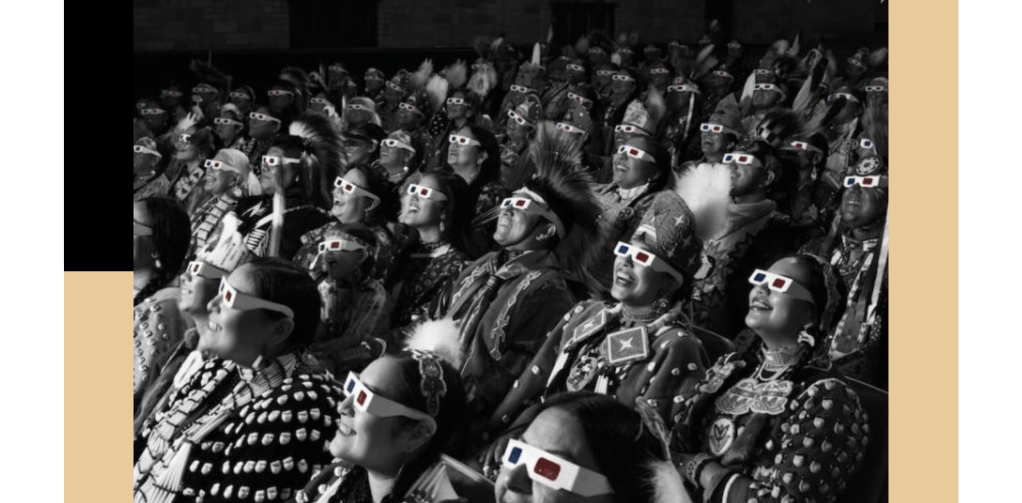
As a study of Indigenous art both contemporary and traditional, I am looking at the works of Steven Paul Judd. As the video says, he uses contemporary images and historic images together to place Native people in nostalgic images that they weren’t necessarily a part of culturally. Representationally during some of the time periods that are being used in his work, Indigenous people were not always seen in the most positive light or seen at all. In the days of the Spaghetti westerns, Native people were the Indian to the Cowboy, the villain to the hero. John Wayne continued that tradition in movies like his 1961 “The Comancheros” where the majority of the images of Native people revolve around a need for wild women and whiskey. So the images that Steven Paul Judd produces are especially important for Native culture because there is a ton of damage to repair, and again, there is a sense of nostalgia that Native people cannot experience because they were not privileged to be a part of that culture. In that respect, he is creating nostalgia for what we all missed out on but can experience now in the most unapologetic way.
By: Steven Paul Judd
Photo provided by artist
Looking at young adult literature I want to finish this blog by discussing a genre that now very strongly includes Indigenous characters, addressing problems seen in Native communities, and sometimes with realistic endings. These endings are happening whether we want to see the story end that way or not. I am going to discuss the genre, not necessarily individual books. I don’t want to generalize, but I do want to express the feelings that I have gotten from reading them.
Of the books that I have read (and there have definitely been a few!) I have been able to experience meeting very relatable, strong, diverse, and unique personalities. The majority of the characters have reminded me of people that I have met in my life. They have highs and lows, and in a Native community those highs can be huge and the lows can be life-altering gut-wrenching painful lows.
Bearing in mind that there are high instances of violence against Native women, drug and alcohol abuse, children not being raised by biological parents, and various other hardships those things through the eyes of young adults can be hard. One of the books directly addresses the Missing and Murdered Indigenous Peoples (MMIP) epidemic that Native communities are experiencing. MMIP, drugs, alcohol, domestic violence, and death are all issues that are happening in Native communities. These are often addressed through the characters in ways that are accessible to young people, in a language that they will understand, and oftentimes uses mythology as a metaphor for violence.
Finally, the ending. to this blog post and to this section of a discussion on young adult lit. Of all the stories I have read there was one in particular that outright made me mad. It was not because the book was bad, it was great, but the ending was realistic. The book I was reading discussed MMIP in a very beautiful and sad way. The main character was forced to relive her best friend’s dying moment several times through her dreams, and she experienced the deaths of two other friends before the “bad guy” was revealed. In the end, the one responsible walked away, and his son became a professional hockey player. It was like there was no justice. When I put this in the context of storytelling I have to think back to the artists that we discussed earlier and how they chose to represent Native people and culture. My critique of this book is because I think that there are lessons to be learned through storytelling. When reading this book with that in mind, I ask what is the lesson? The bad guy wins? Are we doing justice to storytelling to allow reality instead of hope to guide the story?
We have a lot of power when we talk about digital storytelling. We can be vessels of positive messages. The artists we looked at all make an effort to show what they know Native culture to be, not what is expected from the world. I think that’s fair. I hope this analysis of four types of storytelling helps someone see that there is a way to break away from the stereotypical images of what Indigenous storytelling can be, and where it can go. These artists are successfully carving a space out of the popular culture to ensure that the representations of Native culture that the world sees move beyond the generalized, spiritualistic images of wolves, and the mystical sounds of water and eagles screeching.
Works Cited
CBC Music. A Tribe Called Red | CBC Music Festival | Full Concert. YouTube, November 2022. https://www.youtube.com/watch?v=WdD2ASSyypE
FNX TV. The Life of Steven Paul Judd Through Animation. YouTube, November 2022. https://www.youtube.com/watch?v=WvopTuwykew
TEDx Talks. 1491s Play With Themselves, Imagery and Reclamation: 1491s at TEDxManitoba 2013. YouTube, November 2022. https://www.youtube.com/watch?v=MqKvwRrgW_Q&t=22s

 Numunu Family Tree
Leave a comment