Source: Allison Steinmeyer
According to early definitions of rhetoric, it is defined as “all of the available means of persuasion” by Aristotle. Quintillian took it a step further and said that it can’t just be all means necessary, but there is a responsibility to be a “good man speaking well.” When we think about Quintillian’s definition, we also have to think about what makes a good man? Who gets to decide what makes a man good? How does the definition of good translate to what we view as good to the standards of today?
Several generations later, the definition evolved into “a mode of altering reality, not by the direct application of energy to objects, but by the creation of discourse which changes reality through the mediation of thought and action” by Lloyd Bitzer in 1968. This is more in line with the necessary idea that reciprocity must be a part of research and discourse, but the definition I want to focus on is from Michel Foucault. Foucault says, “the purpose of discourse (rhetoric) was to understand its power and the way language, knowledge, and truth can be used to control and regulate through disciplines.”
I feel like clarifying that with a definition of rhetoric that changes as time goes by, it is critical to specify the shift in language and the definition I am using in this blog. Keeping in mind that I am focusing on the act of reciprocity, finding a definition that focuses on power dynamics allows me to analyze the dynamics of that relationship.
I recognize that, if not carefully approached, I am in a position where I could replicate the very things that those ahead of me have worked so hard to avoid. This is why I find such importance in (re)thinking the hows and whys of researcher-community relationships.
Haywood
In researching the rhetoric of reciprocity, I was extremely drawn to the short article written by Constance Haywood (2019). While the focus of Haywood’s research is Black Digital community spaces, there is a lot to be said about the intersections of minority cultural needs.
The term, rhetoric of reciprocity, is one I use to describe the use of reciprocity to persuade. Applying Foucault to this definition, I mean the use of reciprocity or the use of exchange to normally even the playing field, but now to further understand the power dynamics of control between the discourse of different groups. How gifting can maintain the asymmetrical relationships that are normally found in the university.
Reciprocity, as defined by Ellen Cushman (1996), is an “open and conscious negotiation of…power structures reproduced during the give-and-take interactions of [people]involved in both sides of [a]relationship” (p. 16).
Haywood/ Cushman
I found myself asking a lot of questions while thinking through the relationship between the give-and-take of reciprocity and the persuasive power dynamics of rhetoric. In the above video by Anton Deul, I found myself questioning how reciprocity guides our actions. I contemplated if we, as researchers, feel an obligation to respect the reciprocal traditions we come in contact with or are there vestiges of the hierarchal roots between the University and vulnerable communities. I think the most intriguing is the question of if an emic or etic relationship with communities would view the impact of the ethics of reciprocity?
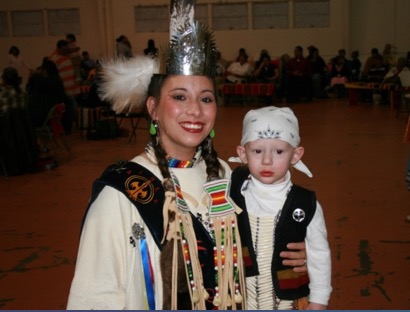
Within schools of community-based research, there are two major types of researchers; those who exist from within the group (the emic) and those who exist outside of the community (the etic). Ethical complications can come about due to the researcher having the ability to exist in both realms simultaneously. For example, as a Native person raised within the Comanche tribal lands, and within the culture; my project looking at Comanche kinship practices gives me an emic perspective. This perspective can become complicated when the tribal people look at me as a researcher capable of exploiting tribal knowledge. Even though I come from that community, as a researcher, I shift into an etic individual to the community. It sometimes takes an act of faith to look at the relationship that can be established as one that doesn’t rely on hegemonic practices.
while reciprocal practices and relationships with the digital communities that we engage should place a focus on building and maintaining relationships, we are still in a place where we should be spending time thinking through our positions with(in) these communities. Frankly, we should be asking ourselves why we are doing the things that we are doing.
Haywood
Historically, early anthropologists had a mission to preserve a group of people who were on a path of “vanishing”. Boazians (students of Franz Boaz) determined that if they were to effectively observe and document microcosms, they would need to develop a type of salvage anthropology. The target of “salvage” anthropology would quickly become the Indigenous peoples of the United States. Those early accounts of the important aspects of Native people would ultimately be not only for the benefit of researchers and the university, but it basically would be through the eyes of the anthropologist. The accounts would not necessarily reflect what was important to the culture being “studied”. This leads me to the comment that Haywood makes when she says, “we should be asking ourselves why we are doing the things that we are doing”. At this point in time, there are still Native communities who need assistance with revitalization, but they want that assistance as part of a community-based research collaboration.
To do activist and community work in the position of a researcher (particularly when working with(in) marginalized communities) means that we should see reciprocity as always being contingent upon the desires and goals of the communities we engage, as these — whatever they may be — should be our goals and values as well.
Haywood
I have mentioned Community-based participatory research a couple times, and I think that it is a good conversation to have. The idea is that when a researcher wants to work in a community, they don’t necessarily walk into the community with a focused topic. This might seem contrary to the “normal” research plan, but it is contradictory because the focus is on what the community wants and needs. In this type of research relationship, the community makes the calls, they hold the knowledge, and determine what they need; the researcher lends their expertise in investigation and exploration. This is an important shift in how research is usually conducted because it not only invites the community to be active participants in the analysis of their culture but puts their knowledge and desires first in the process.
For many groups of people whose cultures have been exploited, this provides a way for rhetorical processes to be less asymmetrical. The idea that both parties are going to benefit from a collaborative relationship has the ability to overcome traumas of the past. Working through those sources of cultural trauma, allows reciprocity to be instrumental in creating a future where researchers and community members can work together for positive change without control and power guiding what is done for who and why.
we need now more than ever for people to be aligned with, vulnerable with, and willing to go above and beyond with the communities they engage. Reciprocity should no longer be seen as ‘I do this for you and you do this for me’ but rather a most genuine ‘I do this for us’.
Haywood
Bastos, Luz. Michel Foucault: Rhetoric. https://foucaultsrhetoric.weebly.com/theory-of-rhetoric-discourse.html. Accessed 7 Nov. 2022.
Bitzer, Lloyd F. “The Rhetorical Situation.” Philosophy & Rhetoric, vol. 1, no. 1, 1968, pp. 1–14. JSTOR, http://www.jstor.org/stable/40236733. Accessed 10 Nov. 2022.
Cushman, E. (1996). The rhetorician as an agent of social change. College Composition and Communication, 47(1), 7-28. https://doi.org/10.2307/358271
Haywood, Constance M. “‘I Do This For Us’: Thinking Through Reciprocity & Researcher-Community Relationships.” Gayle Morris Sweetland Digital Rhetoric Collaborative, 16. December 16, 2019.
Wilson, Shawn. Research is Ceremony: Indigenous Research Methods. Fernwood Publishing, 2008.

 Numunu Family Tree
Leave a comment